Trending

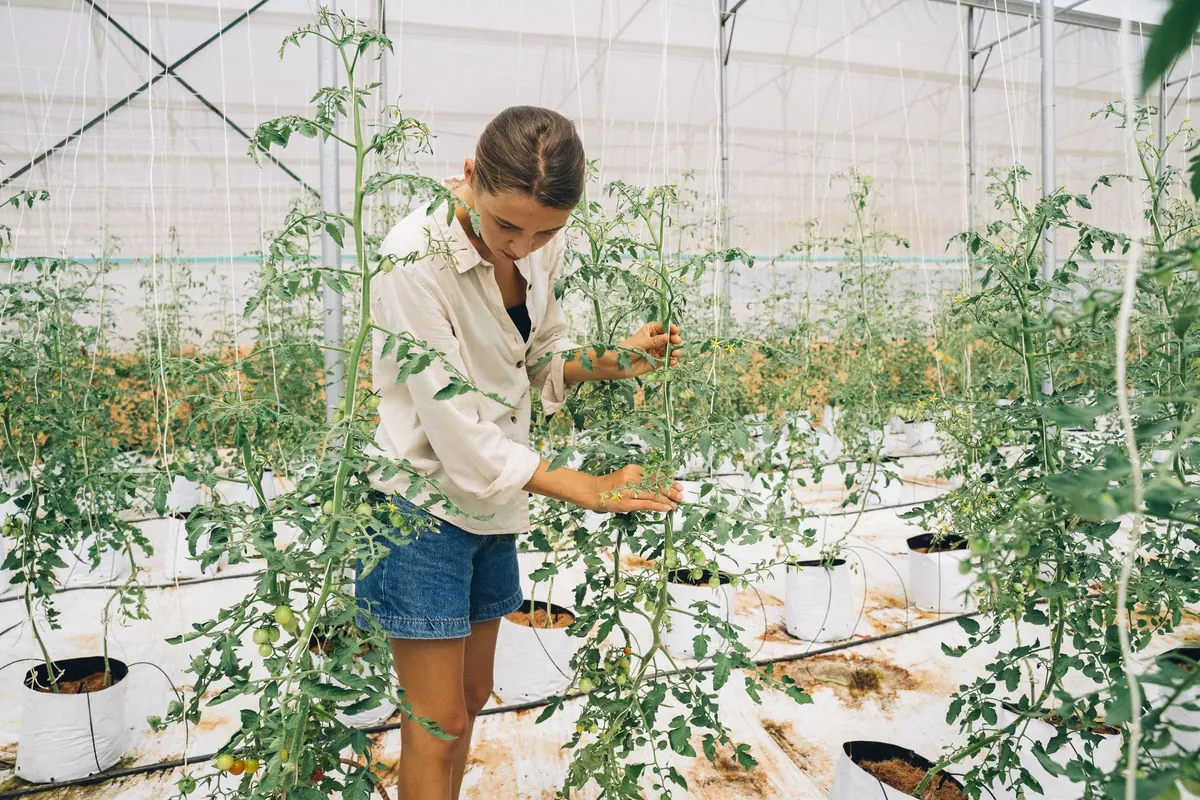
A greenhouse earns its keep with tomatoes. You can sow earlier, plant out earlier, and pick fruit that actually tastes of something rather than the pale, watery specimens that sulk on a supermarket shelf. The secret is timing. Each month from February to October has one job that matters more than the others, and getting those jobs roughly right is what separates a glut from a disappointment.
Under cover you want cordon (indeterminate) varieties, which grow tall up a cane or string and crop over a long season. Reliable choices include 'Gardener's Delight' and 'Sungold' for sweet cherries, 'Alicante' and 'Moneymaker' for classic medium fruit, and 'Costoluto Fiorentino' if you fancy a beefsteak for slicing.
Cherry types are the most forgiving. They set fruit readily in variable conditions and rarely suffer blossom end rot, which makes them a sensible first crop. Bush or trailing varieties such as 'Tumbling Tom' have their place in a large pot on the staging, but they finish sooner.
It pays to sow two or three varieties rather than a whole packet of one. If a disease or a cold snap takes hold, you still have something to pick.
Tomatoes need about 18–21°C to germinate, and a February greenhouse rarely manages that unaided. A heated propagator, a warm windowsill, or a heat mat in a frost-free corner is the realistic starting point.
Sow a second batch in late March or early April. That later crop extends your picking into October without nursing tired, exhausted plants through September.
April is about building strong roots and preparing plants for life outdoors. Move seedlings into 2-litre pots, or straight into their final grow bags if the weather is mild, and keep them somewhere bright and frost-free.
Greenhouse nights are still cold this month. If your structure is unheated, bring plants in during the day and cover them with fleece at night, or simply keep them indoors and move them out on mild afternoons. A week of this gentle to-ing and fro-ing hardens them properly and prevents the check in growth that sets plants back by a fortnight.
Warm the border or grow bags before planting by covering the soil with black polythene for a week or two. Tomatoes planted into cold compost sit and sulk.
Wait until night temperatures stay above about 10°C. In most of the UK that means mid-May, or late April in a heated greenhouse. Plant deeply, burying the stem up to the first set of leaves — tomatoes will root along it and anchor themselves better.
Space cordons 45–60cm apart. In a standard grow bag, three plants is the sensible maximum; give beefsteaks two. If you are growing in the border, sinking bottomless pots or ring-culture collars into the soil makes watering far more controllable.
Support each plant immediately with a cane or a length of string from an overhead wire, twisted loosely around the stem as it grows. Do it now and you will not be wrestling with tangled plants in July.
Tomatoes are thirsty but hate wet feet, and they dislike inconsistency above all. Erratic watering is the usual cause of blossom end rot, not a shortage of calcium in the compost. Water little and often, in the morning, aiming at the compost rather than the leaves. Grow bags dry out fast, so a drip line or soaker hose on a timer is money well spent. In a hot spell, twice a day is normal.
Start feeding when the first truss has set small fruits. Before that, the compost holds enough. Use a high-potash tomato feed at the dilution on the bottle and give it weekly, watering the compost first so the roots are not scorched. If leaves yellow between the veins while the edges stay green, that is magnesium deficiency — a foliar spray of Epsom salts, roughly a teaspoon per litre, applied in the evening, usually corrects it.
Pinch out the side shoots that appear in the leaf joints of cordon varieties once a week. Left alone, they turn a single productive stem into a thicket of leaves and very little fruit. Stop each plant in late August or early September by pinching the growing tip two leaves above the top truss.
Remove lower leaves up to the ripening truss to improve airflow, and tap the canes or mist the flowers mid-morning to help pollination. Open vents by nine in the morning and shade the glass in July, aiming for roughly 21–24°C by day.
As the light fades, ease back on watering and stop feeding altogether. Strip leaves that shade the fruit so what sunlight there is reaches the trusses, and keep picking — a plant carrying ripe fruit slows down on the green ones.
Cool, damp autumn mornings bring grey mould, so ventilate on dry days and remove affected leaves promptly. Before the first frost, pick everything, ripe or not. Green tomatoes ripen perfectly well indoors in a drawer or paper bag, checked daily, and any that refuse make excellent chutney.
Keep a note of what you sowed, when you planted out, and which varieties cropped best. A greenhouse is a long-term project, and the second year is always easier than the first.
Photo: Anna Tarazevich / Pexels